 AI with Breakfast
What am I without a internet connection and an AI model
 Lee
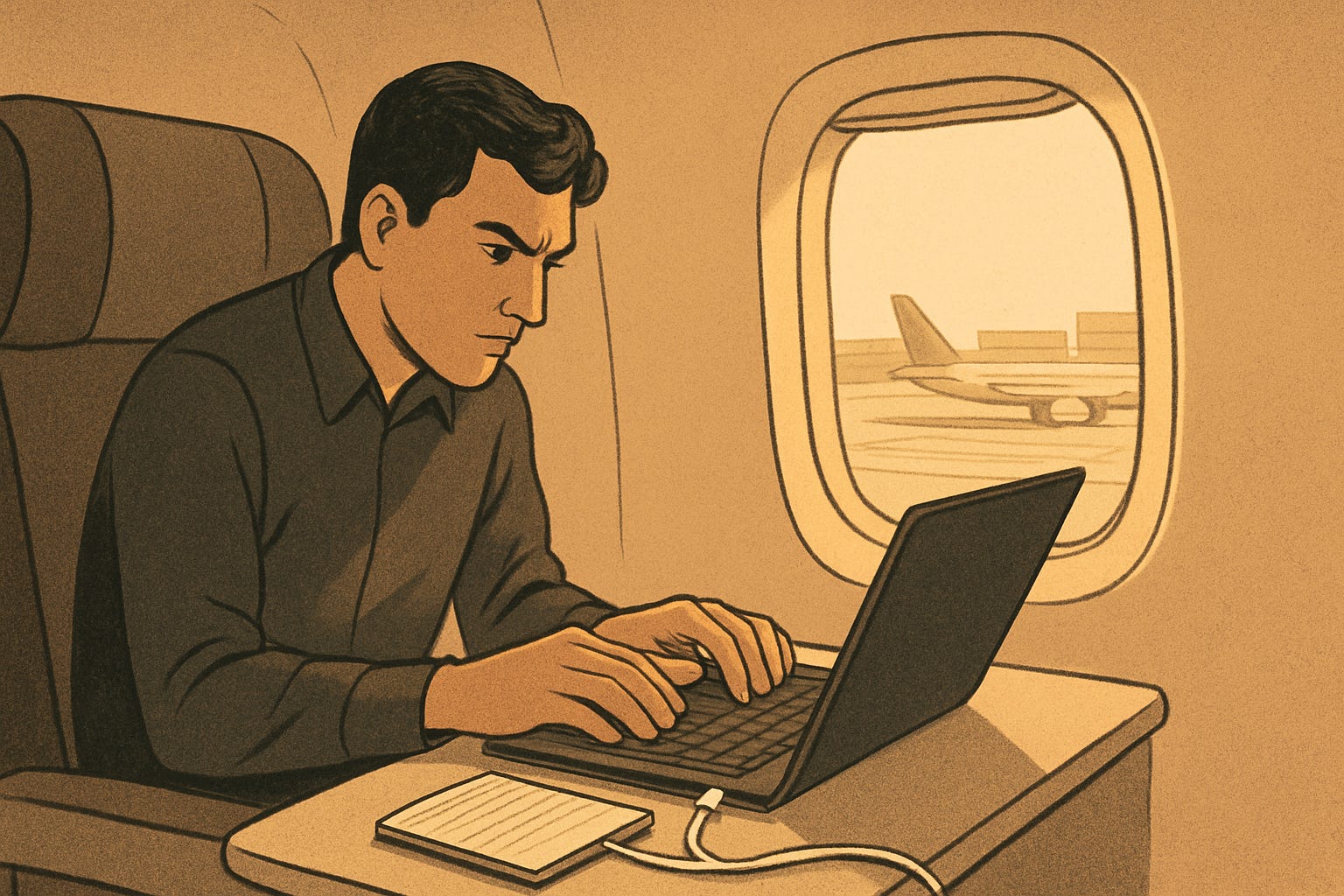
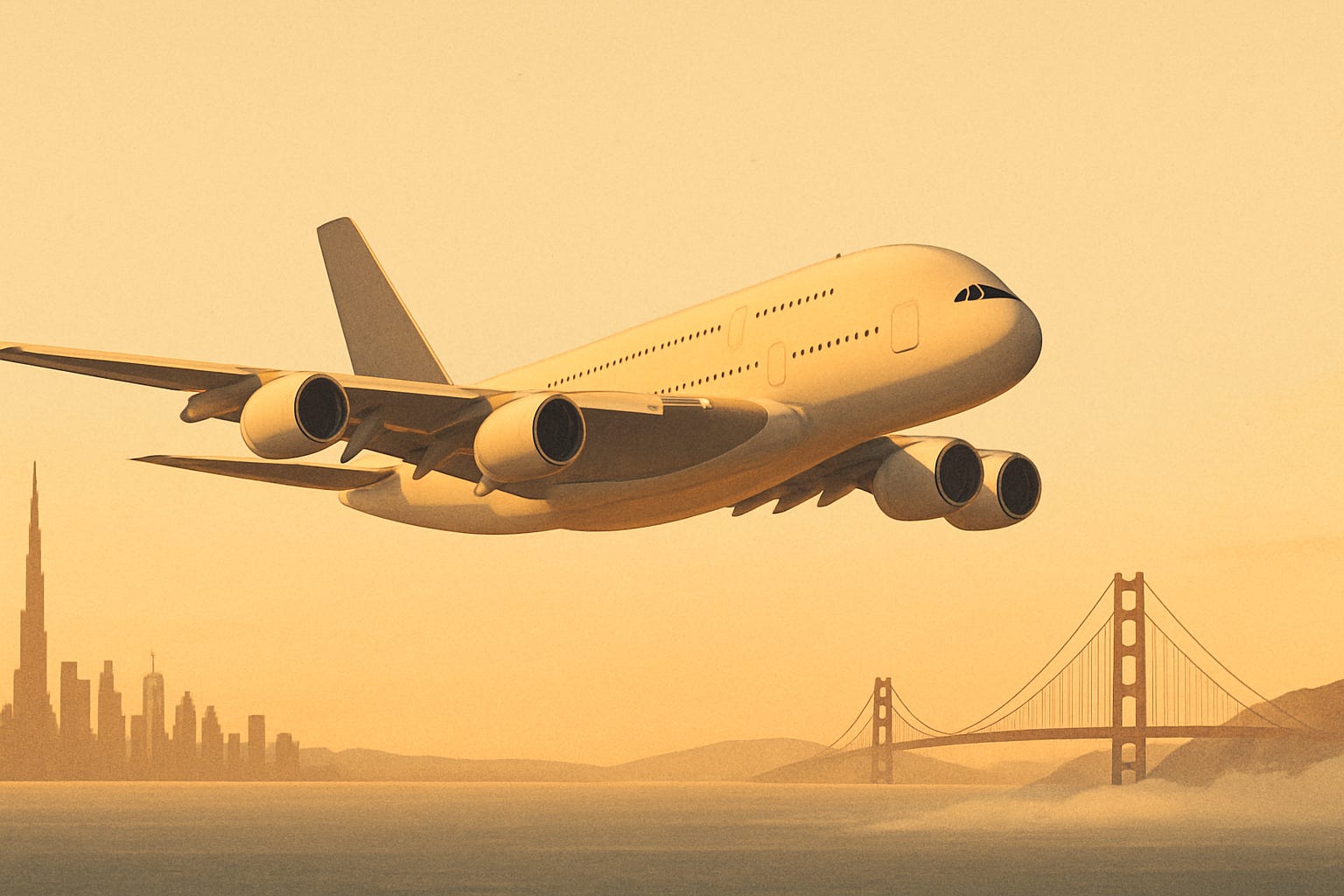
On my flight from Dubai to San Francisco, I had the luxury of Starlink. I could work as if I were at home, in a taxi, or even camping in the desert outside the Abu Dhabi city lights.
So I was looking forward to having it again on the return flight.
No joy.
There was a moment of panic, to be honest. I am so used to using the likes of Claude or Codex to build software, and so used to having 5G or fiber connectivity, and without the internet for 16 hours felt less like an inconvenience and more like losing part of my desk.
What do you do when there is no internet? Relax and enjoy the flight like a crazy person?
No.
You build apps while the plane is taxiing that you can use in offline mode during the flight. Perfectly normal behaviour.

The Internet Has Become Part of My Thinking
Before AI, I would happily code locally. I would open my laptop, work through a problem and build away.
I can still do that.
But now it feels a little like choosing to ride a horse for a 3,000km journey. The horse works. I know how to ride it. There may even be parts of the trip that are quite pleasant.
I also know there is a faster way to get where I am going. That is what surprised me on the flight. I had not lost the ability to write software. I had lost access to the way I now write and want to write software.
There is a difference.
The internet used to give me information, communication and somewhere to put the finished thing. Now it also gives me access to models that sit inside the work itself.
They help me question an idea, write a specification, explore possible approaches, produce code, review that code and work through problems. They are no longer waiting at the end of the process. They are spread throughout it.
The Disconnection Test
I have started thinking of this as the Disconnection Test.

The test is simple: when the internet disappears, what useful work remains?
I do not mean busy work. There is always a document to rename or a folder to reorganise if you are determined to avoid thinking.
I mean the work that needs my judgement, taste and cognitive ability.
When I have all the screens, the internet and access to the models, I can find myself doing tasks simply because they feel normal. The boundary between what I am contributing and what the AI is contributing can become hard to see.
Disconnection makes that boundary visible.
It creates a solid constraint for evaluating how I spend my time. I cannot immediately ask a model. I cannot send a task to an agent. I cannot keep the process moving by reaching for another provider.
I have to ask a more uncomfortable question.
What does this process still need from me?
For me, one of those parts is specification writing.
I tend to build through specifications. A specification explains what I am trying to create, who it is for, how it should behave and what constraints matter.
My process uses AI and large language models, but the base comes from me.
I decide what problem is worth solving. I decide what a useful outcome looks like. I bring the context that has not been written down, and I make the choices where several answers could all appear reasonable.
A model can help me develop a specification. It can find gaps, challenge assumptions and turn rough thinking into a clearer structure.
But I still need to supply the intent.
The flight made me realise that specification writing is work I can do without the internet. In theory, I can do parts of it without a computer, using a good old-fashioned pen and paper.
It also made me realise how many specifications I write and that I do not have a tool dedicated to that process. I have tools for generating code. I have tools for working with models. I have systems for moving from the specification into delivery.
But the place where I form the core idea is still spread across notes apps, pieces of paper and conversations.
One for an App of the Week project.
The constraint did something useful. It showed me both the value I add and a gap in the system around that value.
Try The Disconnection Exercise
Set aside 30 minutes and turn off the connection.
Do not prepare a collection of offline tools first. That rather defeats the point.
Choose one piece of work you are currently doing with AI and write down the outcome you are trying to produce. Not the next prompt. Not the next task. The outcome.
Then ask: which parts require my judgement?

Write down the decisions where context, taste or responsibility matters. These might include defining the problem, choosing who the work is for, deciding what “good” means or identifying a constraint the system cannot know unless you provide it.
Next, separate those decisions from the production work.
What can the AI draft, compare, review or build once you have supplied the direction? What still depends on you when the connection is gone?
Finally, create one useful offline artefact.
For me, that might be a specification with some drawings of boxes. For someone else, it might be a decision, a sketch, a set of requirements or a clear explanation of the problem.
The artefact should make the connected process faster, more trusted or more reliable when you return to it.
This is not about proving that you can work without AI. I do not see much value in turning slower work into a badge of honour.
Once I can see the parts that genuinely depend on me, I can see where I add value. I can also see which skills I need to strengthen, because the gaps are no longer hidden by a model keeping the process moving.
The same exercise exposes the business-as-usual work I may still be doing from habit. Drafting. Formatting. Comparing one version with another. If those tasks do not need my judgement, I can offload them to AI and spend more time on the parts that do.
The point is not to make myself indispensable. It is to become more deliberate about where I am needed.
Dependency Is Not The Same As Weakness
I do not think relying on the internet or frontier models automatically means I have lost something.
We depend on systems because they let us do things that would otherwise take longer or remain out of reach. Organisations are built from these dependencies. So are professions.
The issue is whether we understand them.
It can be very easy in an AI-assisted world to use AI to assist you, without asking whether it could deliver more of the work for you. It is equally easy to hand over more of the work without being clear about where human judgement must remain.
The useful point sits somewhere between the two.
Keep the human where context, responsibility and taste shape the outcome. Use the machine where production, iteration and comparison consume time without adding human value.
Then design the process so each side can do its part properly.
The Next Flight Will Be Different
By the time I next board a flight without internet, I would like the absence of a connection to feel less like losing my desk.
I want a clear set of things I can do because they need me.
Not tasks saved for when the Wi-Fi fails. Work that becomes easier to see when the rest of the system goes quiet.
Until next time :)